
Wastewater PAM Buying and Operating Guides
Compare wastewater PAM grades, supplier quotations, stream-specific purchases and equipment acceptance alongside testing, preparation and dosing guides.
- INPUT
- stream data
- CHECK
- active basis
- OUTPUT
- measured result
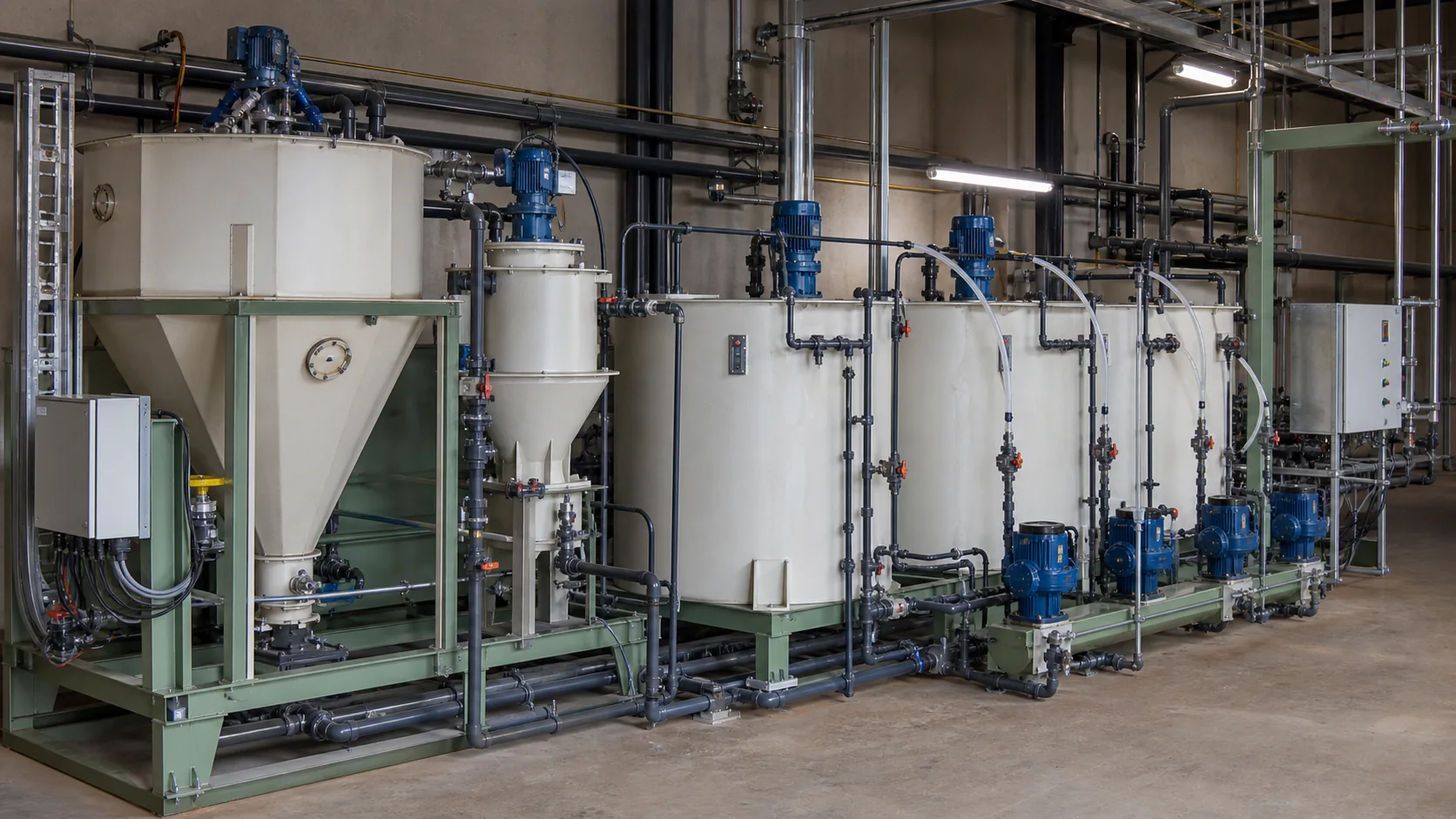
Move from wastewater condition to a measurable decision.
Compare candidate grades against the actual stream, preparation and separator evidence.
Operating fundamentals

How Polyacrylamide Works in Wastewater Treatment
Understand where PAM supports wastewater coagulation, flocculation, DAF, clarification and sludge dewatering—and which evidence proves performance.
Open process file →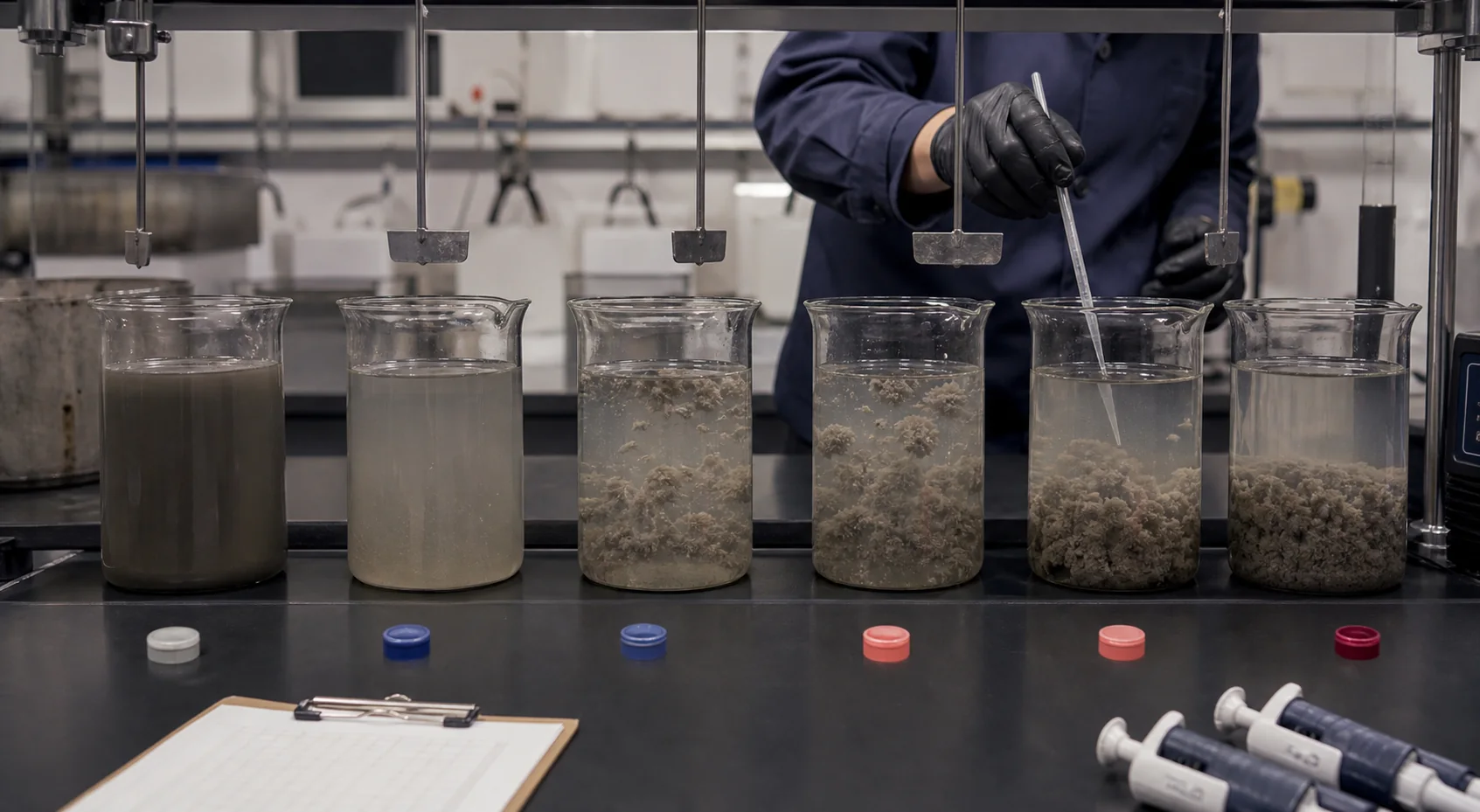
Cationic vs Anionic PAM for Wastewater Treatment
Choose a PAM screening route from solids origin, coagulation state, separation equipment and active-dose evidence—not a generic charge rule.
Open process file →How to Jar Test PAM for Wastewater Treatment
Run a wastewater PAM jar test that controls sample age, coagulation, active dose, mixing, shear and separator-specific measurements.
Open process file →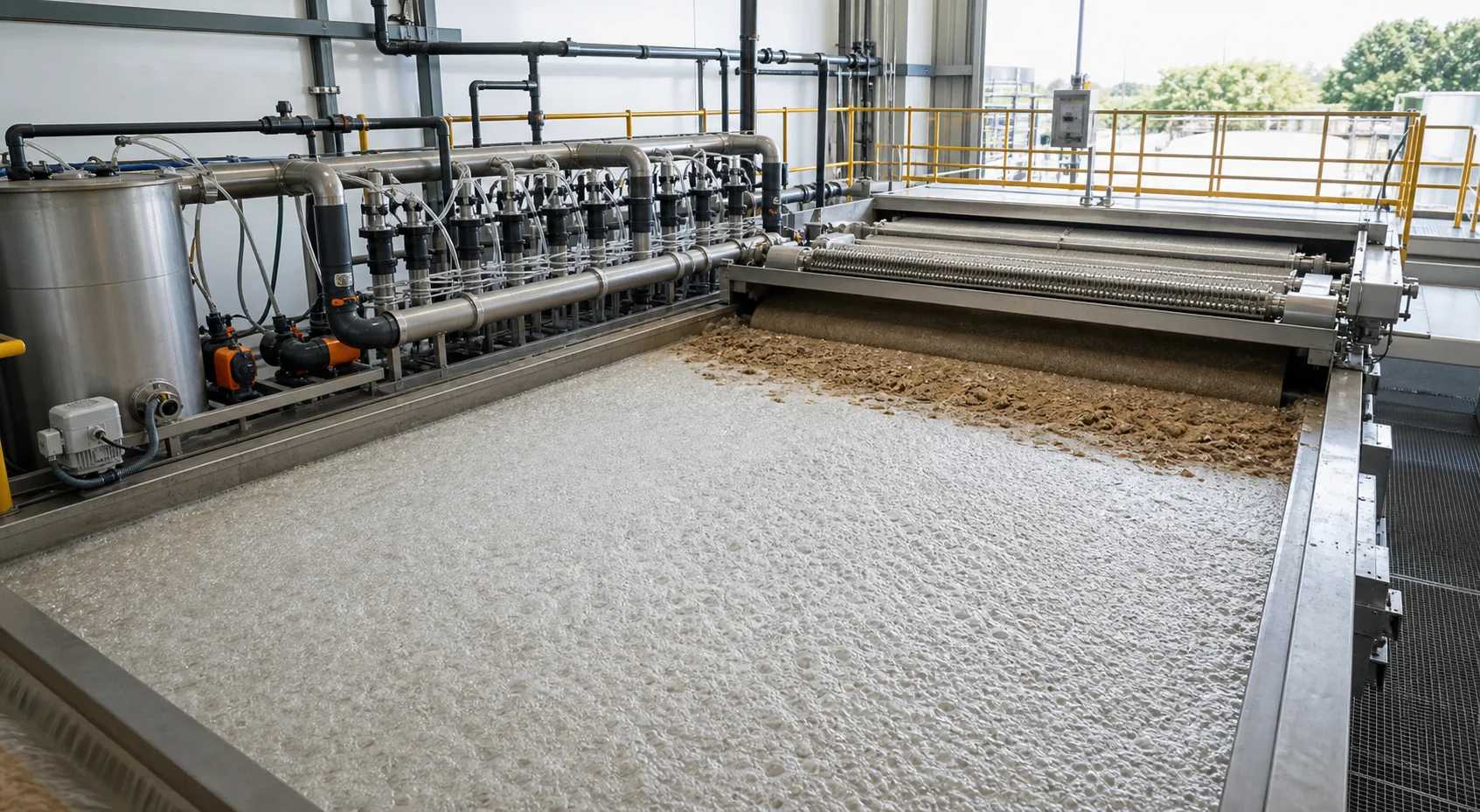
PAM Selection and Addition Point for Wastewater DAF
Optimize PAM after coagulation for wastewater DAF by controlling floc structure, bubble attachment, injection dispersion and float handling.
Open process file →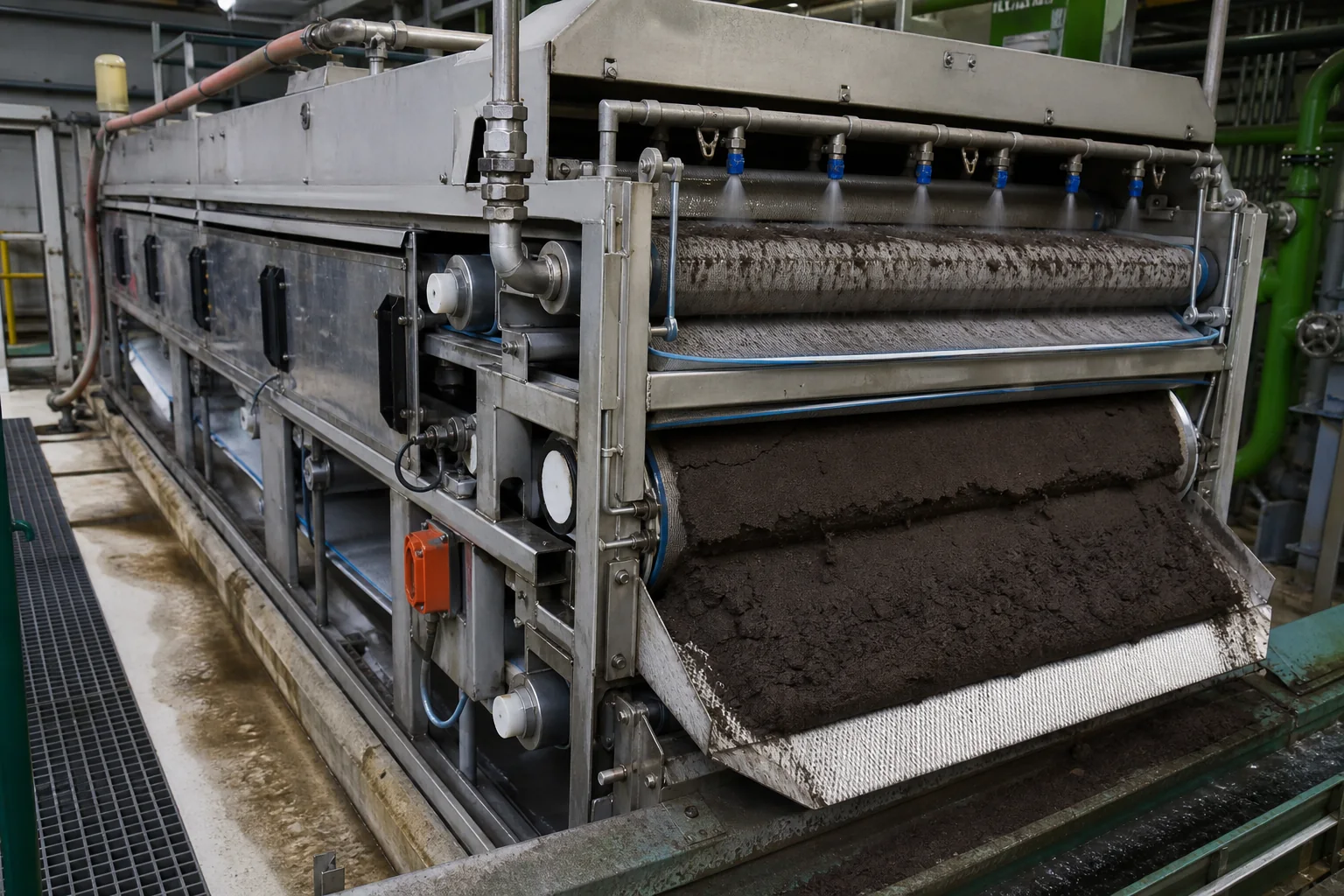
How to Calculate PAM Dose for Sludge Dewatering
Calculate active PAM dose from sludge flow, feed solids and product active content, then judge cake, capture, throughput and recycle quality together.
Open process file →PAM Overdose and Wastewater Treatment Troubleshooting
Distinguish PAM overdose from underdose, poor preparation, coagulation drift and equipment faults using controlled wastewater process evidence.
Open process file →PAM Solution Preparation for Wastewater Plants
Control dry PAM wetting, dilution, aging, storage, pump calibration and injection so wastewater trials measure the product rather than make-down faults.
Open process file →
Polyacrylamide for Wastewater Treatment Supplier RFQ
Prepare a wastewater PAM RFQ with stream data, equipment, active-dose evidence, sample traceability, documents, packaging and delivery terms.
Open process file →Product and commercial qualification
Wastewater PAM Grade Specifications: Compare Charge and Molecular Claims
Review wastewater PAM offers by ionic family, declared active content, property methods, preparation requirements and separator-specific performance.
Open process file →Wastewater PAM Price: Compare Cost per Accepted Dry Tonne
Compare dewatering PAM quotations through delivered active cost, measured dry-solids dose, cake handling, solids capture and treatment capacity.
Open process file →Wastewater PAM Powder or Emulsion: Compare the Installed Supply System
Compare powder and emulsion PAM purchases by active basis, preparation hardware, storage, response capacity, wastewater performance and conversion scope.
Open process file →Ordering Wastewater PAM Samples: Match Codes to a Practical Test Plan
Request a focused wastewater PAM sample set with representative streams, candidate rationale, preparation instructions, repeat testing and commercial-code mapping.
Open process file →Replacing a Wastewater PAM Supplier: Keep the Incumbent Comparison Valid
Qualify a replacement wastewater PAM supplier using coded samples, an incumbent reference, plant-compatible preparation and controlled production-lot acceptance.
Open process file →Wastewater PAM Tender: Define Performance Gates Before Price Ranking
Prepare a wastewater polymer tender with stream-specific tests, common acceptance criteria, sample identity, mandatory documents and transparent commercial scoring.
Open process file →Wastewater and sludge purchase duties
PAM for Waste Activated Sludge: Buy for Capture and Drainage Stability
Evaluate waste-activated-sludge PAM using feed condition, storage, biological changes, drainage, machine capture, cake handling and dry-solids consumption.
Open process file →PAM for Digested Sewage Sludge: Qualify the Supplier on Actual Feed
Select digested-sludge PAM through actual digestion and storage conditions, preparation, shear response, capture, cake quality and returned-liquid evidence.
Open process file →PAM for Mixed Primary and Secondary Sludge: Set the Approved Blend Range
Buy PAM for blended primary and biological sludge using representative blend states, storage conditions, preparation and machine-specific capture and cake results.
Open process file →PAM for Food Processing Wastewater DAF: Buy Against FOG and Float Handling
Evaluate food-processing DAF PAM through fats and suspended solids, cleaning cycles, primary coagulation, floated-water quality and float-sludge handling.
Open process file →PAM for Dairy Wastewater: Specify Product Losses and CIP Conditions
Prepare a dairy-wastewater PAM enquiry using product-loss streams, CIP variability, equalization, coagulation, flotation and downstream biological requirements.
Open process file →PAM for Paper Mill Effluent: Qualify Fibre and Fines Recovery
Select paper-effluent PAM through fibre and filler variability, process additives, clarification or DAF, recovered-solids handling and water-reuse requirements.
Open process file →PAM for Textile Effluent: Separate Solids Capture from Dissolved Colour
Define textile-wastewater PAM purchasing around solids separation, dye-batch chemistry, upstream treatment and measured colour or COD fractions.
Open process file →PAM for Metal-Finishing Wastewater: Purchase for Precipitated-Solids Separation
Evaluate PAM for metal-finishing effluent through verified precipitation, pH, complexing chemistry, fine-solids capture and separated-sludge handling.
Open process file →PAM for Saline or Acidic Wastewater: Qualify a Low-Charge Offer
Review low-charge PAM offers for saline or acidic industrial wastewater using actual ion composition, upstream chemistry, preparation and accepted separation.
Open process file →Equipment and delivery acceptance
PAM for Sludge Centrifuges: Buy Against Shear, Capture and Throughput
Qualify centrifuge PAM by representative sludge, preparation, injection and shear conditions, cake solids, centrate quality, throughput and active dose.
Open process file →PAM for Screw Press Sludge Dewatering: Define Drainage and Cake Acceptance
Evaluate screw-press PAM with actual sludge, conditioning contact, drainage behavior, filtrate solids, cake release and dry-solids throughput.
Open process file →PAM for Belt Filter Presses: Purchase for Drainage, Capture and Belt Release
Buy belt-press PAM using free-drainage response, feed distribution, capture, cake solids, belt release and polymer consumption under controlled machine conditions.
Open process file →PAM Before Wastewater Membranes: Review Carryover Before Purchasing
Assess PAM upstream of wastewater membranes through equipment-vendor compatibility, separation carryover, relevant fouling indicators and bounded plant trials.
Open process file →Bulk Wastewater PAM Deliveries: Connect COA, Sample and First-Lot Release
Accept bulk wastewater PAM with defined COA methods, sample-to-commercial identity, protected packaging, retained references and controlled first-lot plant checks.
Open process file →