
Define the product purchase
A grade approved on undigested sludge does not automatically qualify for digested feed. Digestion, blending and storage can change the conditioning demand and returned-liquid burden. Give the supplier a representative feed record before asking for a replacement or recurring dewatering product.
Identify the stream, separator and unresolved limitation before selecting a trial grade. Preserve the proposed commercial code so laboratory work and purchasing refer to the same material.
Define the digestion and feed state
Identify digestion route, sludge blend, feed solids, temperature, pH, conductivity and storage duration. Include recent process changes and any upstream chemical conditioning. Mark the sample collection point and age.
A cooled or stored laboratory sample may no longer represent the material entering the machine; retain that limitation in the comparison.
Bracket grades under realistic handling
Use coded candidates with documented active basis and preparation. Compare drainage or other relevant bench indicators, then confirm the leading conditions in the actual machine.
Use the ionic-family record to frame a justified cationic screen without assuming that maximum charge is universally best.
Keep returned liquid in acceptance
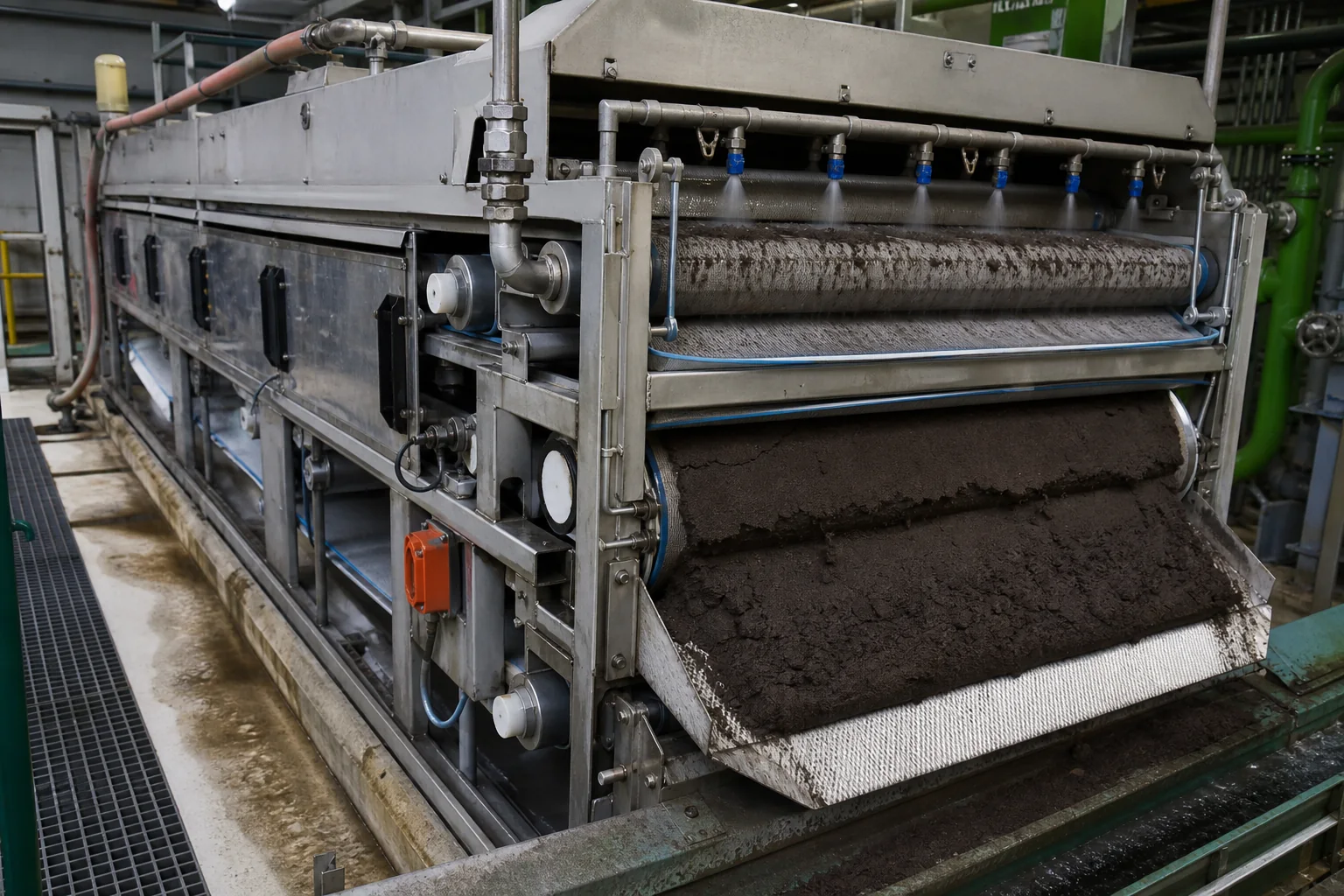
Pair cake solids and throughput with capture and centrate or filtrate quality. Use the dry-solids dose basis and allow the machine to stabilize before sampling.
Polymer acceptance should identify the demonstrated feed range. It should not imply removal of dissolved nutrients or other dissolved constituents merely because cake quality improves.
Resolve a conflicting result
A dry cake can coincide with dirty centrate or reduced throughput. Do not award that point as a complete improvement until all agreed dewatering and recycle requirements are compared.
Retain the reference condition and repeat the comparison where sampling or instrument variability obscures the difference. Report what remains untested rather than extending one favorable response to the entire plant.
Set the release evidence
| Acceptance check | Evidence | Purchase decision |
|---|---|---|
| History | Digestion, blend and storage | Actual feed represented |
| Method | Preparation and machine stress | Scale-up credible |
| Acceptance | Cake plus returned liquid | Combined duty qualified |
Keep preparation, calibrated active delivery, feed condition and output measurements together. Record rejected conditions as well as the accepted range so a later delivery can be assessed against a reproducible reference.
Request an application-matched offer
Send digestion and storage information, dry-solids loading, machine settings and current outputs. Request a sample-to-production proposal with the relevant feed limitations clearly recorded.
Use the wastewater PAM sample and quotation form and review product documents and delivery controls with Gongyi Xinqi Polymer Co., Ltd.. Confirm offered grades, commercial terms and any required approvals before ordering.