
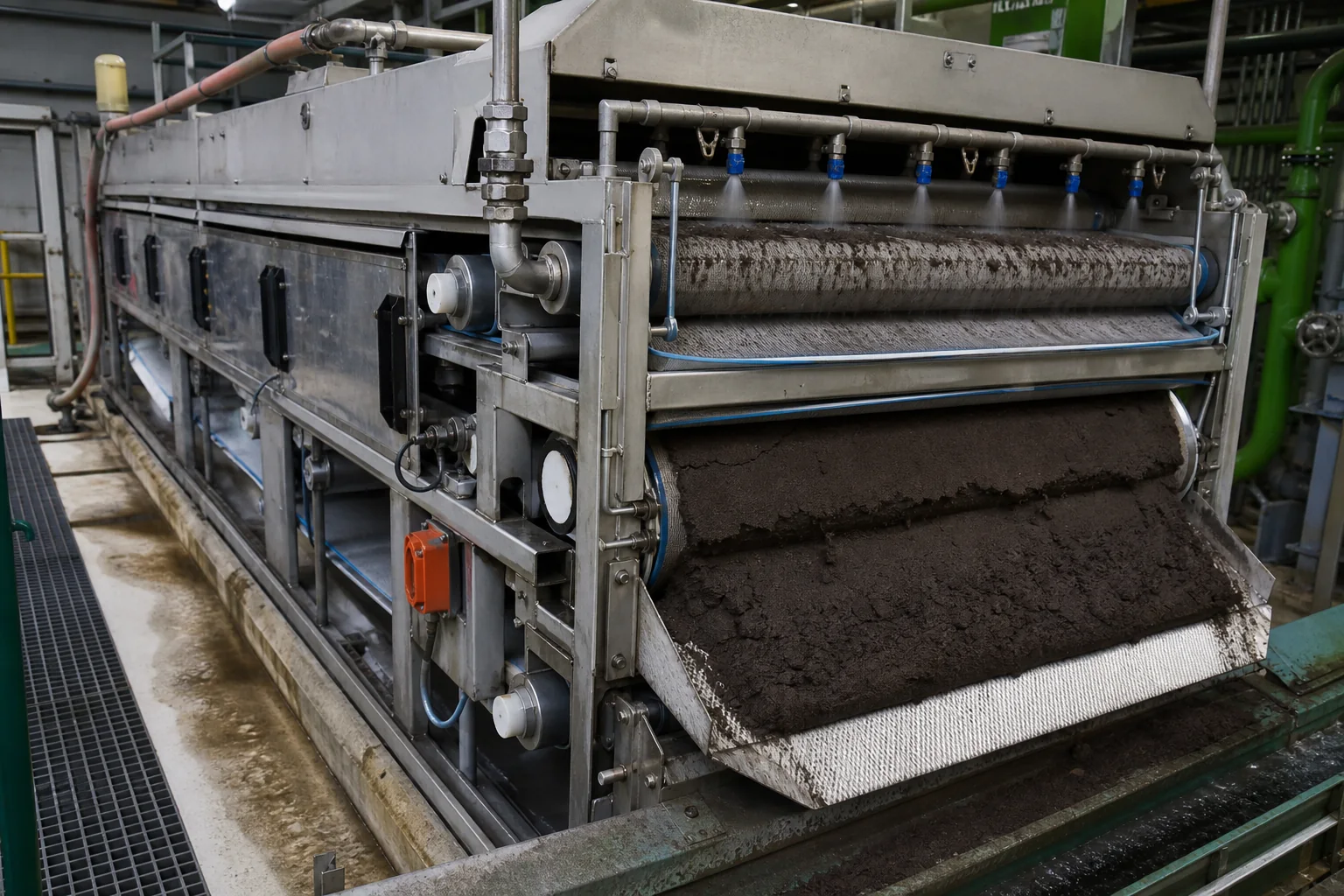
Define the product purchase
Waste activated sludge is not a fixed polymer substrate. Biological condition, industrial contribution and storage can change water binding and conditioning response. Purchasing should identify the sludge range that the proposed grade must handle rather than ordering a high-charge product by habit.
Identify the stream, separator and unresolved limitation before selecting a trial grade. Preserve the proposed commercial code so laboratory work and purchasing refer to the same material.
Describe the sludge at the machine
Record feed solids, volatile fraction where used, pH, conductivity, temperature and storage history. Include recent biological process or industrial-loading changes. Separate fresh waste sludge from thickened or blended material.
The biological dewatering record connects these inputs to separator-specific measurements.
Compare a relevant charge bracket
Screen justified cationic profiles with matched active additions and traceable preparation. Check drainage and liquid solids, then challenge the leading flocs with realistic handling.
A rapidly draining small test is useful screening evidence but does not establish cake release, centrifuge capture or full-machine capacity.
Approve an operable dose window
Use measured dry-solids loading and calibrated polymer delivery. Compare capture, cake and throughput over repeat stable periods. Identify which feed changes trigger preparation checks and which require a new product screen.
Keep the accepted sludge state in the supply record. Do not extend a successful fresh-sludge trial to every stored or upset condition without testing.
Resolve a conflicting result
If the same product suddenly needs more polymer after extended sludge storage, compare feed history and a retained reference before blaming the arriving lot. Changed biological material can alter the treatment demand.
Retain the reference condition and repeat the comparison where sampling or instrument variability obscures the difference. Report what remains untested rather than extending one favorable response to the entire plant.
Set the release evidence
| Acceptance check | Evidence | Purchase decision |
|---|---|---|
| Feed | Solids and storage history | Representative sludge |
| Screen | Charge bracket and shear response | Useful candidate range |
| Plant | Capture, cake and stable dose | Routine duty qualified |
Keep preparation, calibrated active delivery, feed condition and output measurements together. Record rejected conditions as well as the accepted range so a later delivery can be assessed against a reproducible reference.
Request an application-matched offer
Send sludge results, storage and thickening arrangements, equipment, current dose and capture data. Request a coded bracket designed for the actual waste-sludge condition and plant confirmation.
Use the wastewater PAM sample and quotation form and review product documents and delivery controls with Gongyi Xinqi Polymer Co., Ltd.. Confirm offered grades, commercial terms and any required approvals before ordering.