
Define the product purchase
A sample order should narrow a purchasing decision rather than fill a laboratory shelf. Specify which stream is being treated, why the current result is inadequate and what test can distinguish useful candidates. The quantity must support the intended preparation and repeat work, not an assumed universal sample size.
Identify the stream, separator and unresolved limitation before selecting a trial grade. Preserve the proposed commercial code so laboratory work and purchasing refer to the same material.
Collect the limiting process information
Describe wastewater source, storage age, pH, solids, upstream chemicals and the separator. Keep different sludge and liquid duties distinct. State whether the limitation is liquid carryover, drainage, cake release or inadequate capacity.
Do not combine unrelated feeds into one convenient composite if the difficult batch controls the purchase requirement.
Ask for a small explained bracket
Request identified adjacent profiles and the selection rationale for each. Require active basis, preparation conditions, current safety information and a link to the eventual commercial product. Include an incumbent reference where available.
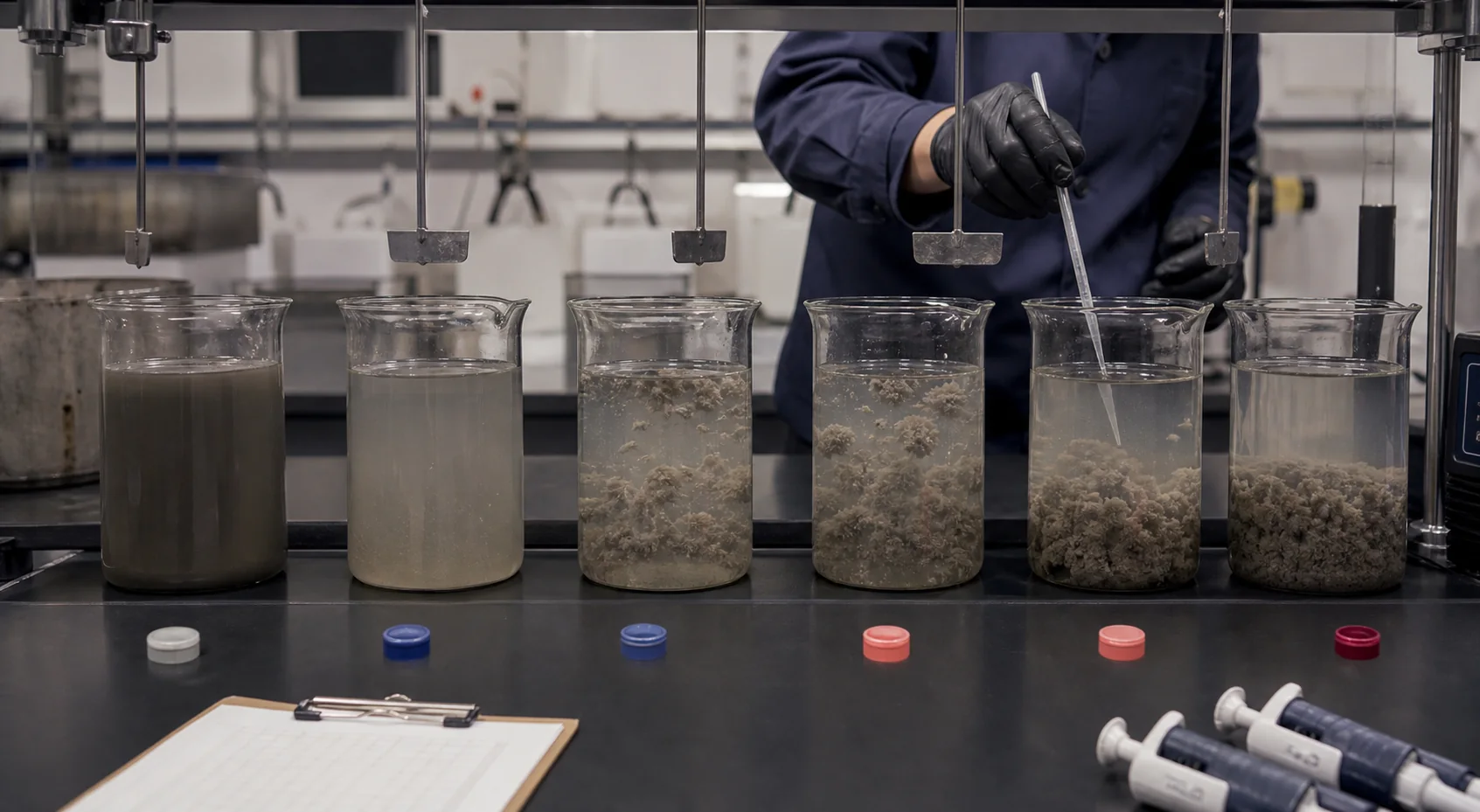
The bench-screening method provides common controls without assuming the same mixing and endpoint qualify every separator.
Agree how a sample advances
Plan repeat work on representative fresh material and define the machine or plant confirmation required after initial ranking. Preserve rejected points and the observed stable dose range.
A supplier should be able to trace the accepted sample into a quotation. An anonymous bag that cannot be reordered is weak purchasing evidence even if the first jar looks promising.
Resolve a conflicting result
If the incumbent and every candidate fail on one stored sludge sample, investigate sample history and preparation before ordering a larger random sample set. The problem may lie in the comparison rather than the candidate range.
Retain the reference condition and repeat the comparison where sampling or instrument variability obscures the difference. Report what remains untested rather than extending one favorable response to the entire plant.
Set the release evidence
| Acceptance check | Evidence | Purchase decision |
|---|---|---|
| Stream | Fresh material and process history | Right purchase duty |
| Candidates | Coded and justified bracket | Useful differences tested |
| Progression | Repeat and equipment confirmation | Evidence before recurring order |
Keep preparation, calibrated active delivery, feed condition and output measurements together. Record rejected conditions as well as the accepted range so a later delivery can be assessed against a reproducible reference.
Request an application-matched offer
Send current data, incumbent details, available test equipment, destination and intended scale. Request enough coded material for the agreed repeat plan with no unconfirmed sample or lead-time promises.
Use the wastewater PAM sample and quotation form and review product documents and delivery controls with Gongyi Xinqi Polymer Co., Ltd.. Confirm offered grades, commercial terms and any required approvals before ordering.