
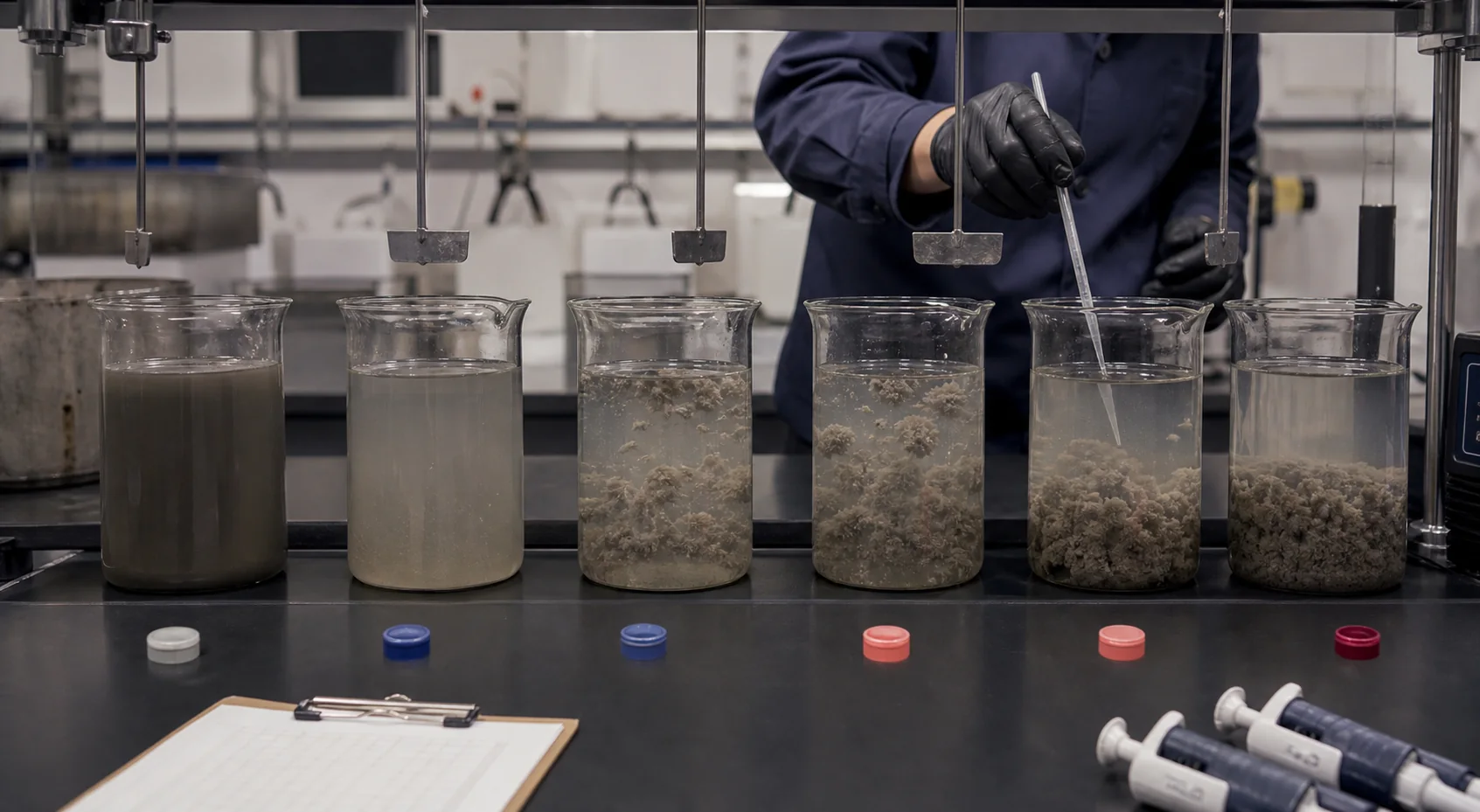
Define the product purchase
A textile-effluent polymer offer should state which treatment task is being purchased. Better flocculation can improve separation of suspended or coagulated material without proving complete removal of dissolved dyes, salts or COD. Separate those endpoints before comparing samples or prices.
Identify the stream, separator and unresolved limitation before selecting a trial grade. Preserve the proposed commercial code so laboratory work and purchasing refer to the same material.
Describe dyeing and cleaning variability
Provide source processes, batch changes, pH, conductivity, temperature and relevant colour, solids and organic measurements. State the sampling and filtration methods used to distinguish fractions.
A low-solids sample with strong dissolved colour poses a different purchasing question from a stream rich in coagulated pigment or suspended fibres.
Keep primary chemistry controlled
Reproduce any pH correction, coagulant or other upstream treatment before screening PAM. Compare plausible charged and low-charge candidates only where the matrix justifies them.
The industrial chemical-treatment record keeps polymer selection connected to the actual sequence rather than a standalone decolourisation claim.
Approve the demonstrated contribution
Measure suspended-solids removal and the specific colour or COD change associated with the tested train. Check separated-sludge handling and downstream requirements.
Do not assign all improvement to PAM if primary chemistry changed simultaneously, or promise performance across untested dye recipes and salinity conditions.
Resolve a conflicting result
If turbidity falls while filtered colour remains high, raising polymer dose is not a demonstrated solution to the dissolved target. Investigate the responsible treatment step before buying a supposedly stronger flocculant.
Retain the reference condition and repeat the comparison where sampling or instrument variability obscures the difference. Report what remains untested rather than extending one favorable response to the entire plant.
Set the release evidence
| Acceptance check | Evidence | Purchase decision |
|---|---|---|
| Fractions | Solids and dissolved measurements | Correct task defined |
| Sequence | Upstream chemistry recorded | PAM contribution interpretable |
| Release | Water and sludge acceptance | No universal colour claim |
Keep preparation, calibrated active delivery, feed condition and output measurements together. Record rejected conditions as well as the accepted range so a later delivery can be assessed against a reproducible reference.
Request an application-matched offer
Send batch history, analytical methods, chemical sequence, separator information and target fractions. Request a sample screen that explicitly states what the polymer is expected to improve.
Use the wastewater PAM sample and quotation form and review product documents and delivery controls with Gongyi Xinqi Polymer Co., Ltd.. Confirm offered grades, commercial terms and any required approvals before ordering.