
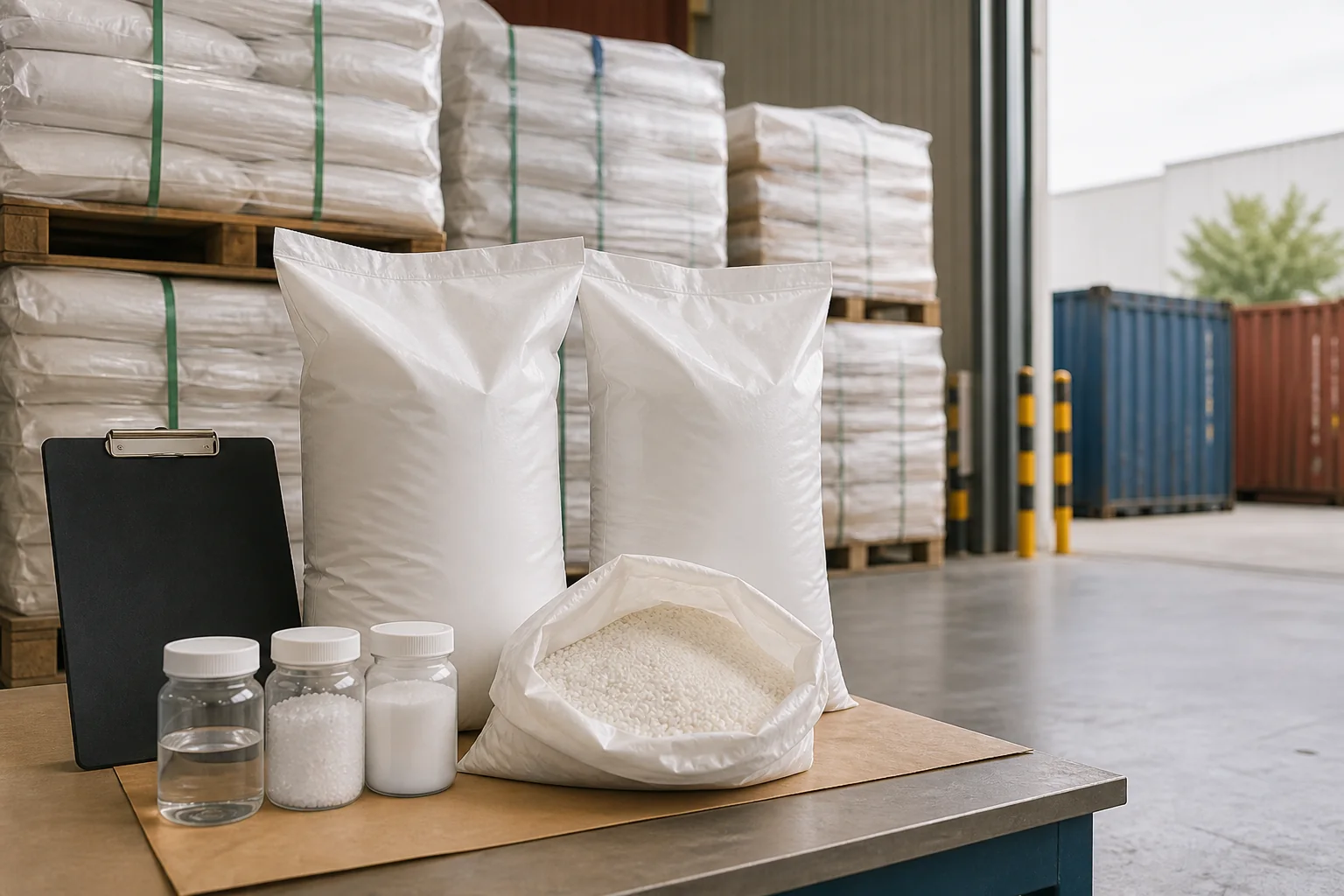
Define the product purchase
A successful sample should remain traceable when the first commercial shipment arrives. Purchasing and operations need a common lot-release record rather than a laboratory approval disconnected from warehouse labels. Define the required documents and exceptions before dispatch.
Identify the stream, separator and unresolved limitation before selecting a trial grade. Preserve the proposed commercial code so laboratory work and purchasing refer to the same material.
Agree useful product documents
Separate routine lot tests from typical catalogue descriptions and identify methods, units and contractual limits. Match the accepted sample to the proposed commercial code and current safety documentation.
The supplier RFQ record provides the original approval requirement; a COA should support that identity, not replace the treatment evidence.
Protect condition and traceability
Agree offered package, net mass, marking and destination handling. Inspect seals, moisture or damage and match lot codes to shipment records. Keep questionable material on hold rather than blending it into routine stock.
Use the exact product storage and handling guidance. Do not invent universal shelf life, fixed lead time or a certification claim from an unrelated company document.
Release through a controlled comparison
Retain samples according to the plant quality procedure and verify preparation and calibrated feed. Compare the first lot with the accepted reference on representative material, then confirm the required machine or water result.
Define who can release the lot and which product or manufacturing changes require review. A delivery deadline should not authorize an undocumented substitution.
Resolve a conflicting result
If labels and COA match but solution behavior differs, compare the retained reference, preparation water and calibration before assigning a batch fault. Preserve the investigation evidence rather than accepting or rejecting by appearance alone.
Retain the reference condition and repeat the comparison where sampling or instrument variability obscures the difference. Report what remains untested rather than extending one favorable response to the entire plant.
Set the release evidence
| Acceptance check | Evidence | Purchase decision |
|---|---|---|
| Documents | Code, method and agreed limits | Identity established |
| Delivery | Seals, condition and lot mapping | Stock protected |
| Release | Reference and plant confirmation | Routine order justified |
Keep preparation, calibrated active delivery, feed condition and output measurements together. Record rejected conditions as well as the accepted range so a later delivery can be assessed against a reproducible reference.
Request an application-matched offer
Send the approved sample record, purchase specification, receiving constraints and expected demand. Request a shipment proposal with document, hold and first-lot confirmation responsibilities stated.
Use the wastewater PAM sample and quotation form and review product documents and delivery controls with Gongyi Xinqi Polymer Co., Ltd.. Confirm offered grades, commercial terms and any required approvals before ordering.